



深圳市西乡大道与前进二路交汇处彩虹城四楼

Tel:+86 18719065966 ( WhatsApp / Line / WeChat )
一、Basic idea
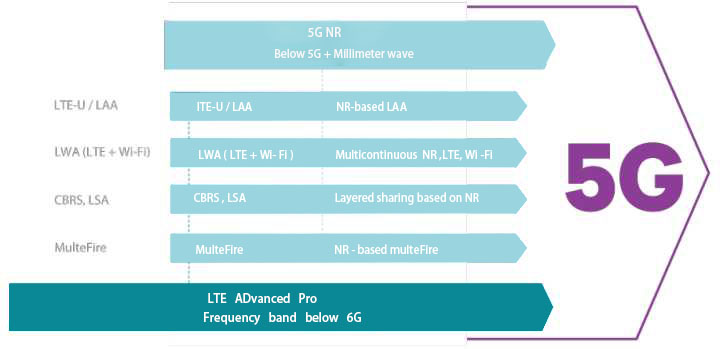
The fifth generation mobile phone communication technology standard, abbreviated: 5G. It is an extension after 4G, and the technical standards are currently under study. The 5G network has a theoretical downlink speed of 10Gb/s (equivalent to a download speed of 1.25GB/s). Due to the rapid development of the Internet of Things, especially the Internet car and other industries, it has higher requirements for network speed, which undoubtedly becomes an important factor in promoting the development of 5G networks. Around the world, 5G networks are being vigorously promoted to meet the next wave of technology. However, from the current situation, 5G network is expected to take four to five years from commercial application.
二、5GTechnical index
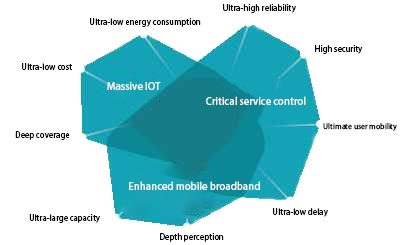
The signature capability indicator is "Gbps user Experience Rate," a set of key technologies including large-scale antenna arrays, ultra-dense networking, new multiple access, full spectrum access, and new network architectures. Large-scale antenna array is one of the most important technical means to improve the spectral efficiency of the system, which will play an important supporting role in meeting the capacity and speed requirements of 5G system. By increasing the deployment density of base stations, ultra-dense networking can achieve a hundred-fold capacity increase, which is one of the most important means to meet the needs of 5G thousand-fold capacity growth. The new multiple access technology improves the access capability of the system through the superposition transmission of sent signals, which can effectively support the connection needs of hundreds of billions of devices in 5G networks. Full spectrum access technology can effectively alleviate the huge demand for spectrum resources in 5G networks by effectively utilizing various spectrum resources. The new network architecture is based on advanced technologies such as SDN, NFV and cloud computing to achieve a more flexible, intelligent, efficient and open 5G network that is user-centered.
三、5G Existing obstacle
1、The first is regulation and licensing
Fixed and mobile networks have a long history of different regulatory and operating licenses. For example, in many countries, fixed-line operators started out as monopolies, with similar carrier and pricing restrictions. Wholesale broadband capacity to Internet service providers, for example, is regulated by the state. Others rely on state-allocated spectrum.
2、The second is the organization
Mobile operators are, in many cases, controlled by fixed-line operators or subsidiaries. The integration of fixed-line and mobile networks needs to be revisited by the country's competition authorities. Competition authorities prefer to operate separately than together. Then there are the differences in strategy.
3、Other obstacles - standards
Open standards for technology interoperability are important to the telecommunications industry. Standardization also requires extensive efforts and cooperation, and there are now different standards organizations in the mobile and fixed network fields. 3GPP and ETSI have been very successful in mobile standardization, ITU-R is very authoritative in spectrum allocation, and ITU-R has begun to work on network standardization requirements for IMT-2020 (5G) technology.
四、5G development status and progress
According to current national studies, compared with the current 4G technology, the peak speed of 5G technology will increase by tens of times, from 100Mb/s of 4G to tens of Gb/s. In other words, more than 10 high-definition movies can be downloaded in 1 second, and the number of user connections that can be supported has increased to 1 million users/square kilometer, which can better meet the mass access scenarios such as the Internet of Things. At the same time, end-to-end latency will be reduced from a dozen milliseconds for 4G to a few milliseconds for 5G.
In February 2013, the European Union announced plans to introduce mature standards by 2020.
On May 13, 2013, South Korea's Samsung Electronics announced that it has successfully developed the core technology of the 5th generation of mobile communications (5G) and will begin to commercialize it in 2020. The technology can transmit data at speeds of more than 1Gbps in the 28 GHZ ultra-high frequency band, and the longest transmission distance is up to 2 kilometers.
As early as 2009, Huawei launched research on related technologies and predicted that users will enjoy 20Gbps commercial 5G mobile networks in 2020.
On May 8, 2014, Japanese telecom operators and six other manufacturers worked together to begin testing a high-speed 5G network with 1,000 times the network carrying capacity of the existing 4G network, and the transmission speed is expected to increase to 10Gbps. It is expected to begin operations in 2020.
On March 1, 2015, the British "Daily Mail" reported that the UK has successfully developed a 5G network and carried out a data transmission test within 100 meters, with data transmission up to 125GB per second, which is 65,000 times that of 4G networks. It will be put into commercial use in 2020.
On 3 March 2015, the European Union expressed its voice in the global standards for next-generation mobile technologies and its vision for cooperation between 5G companies in the EU. 5G networks in the EU are expected to be operational between 2020 and 2025.
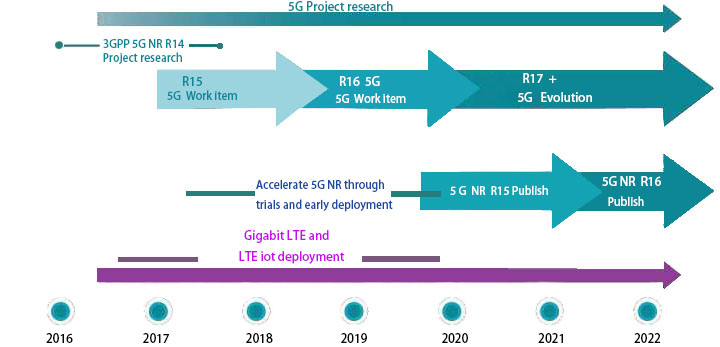
On September 7, 2015, the US mobile operator announced that it would begin trials of 5G networks in 2016, with full commercial use in some US cities in 2017. China's 5G technology research and development test will be carried out in 2016-2018, which is divided into three stages: 5G key technology test, 5G technology solution verification and 5G system verification.

5G has a higher rate and wider bandwidth, and it is expected that 5G network speed will be about 10 times higher than 4G, with higher reliability and lower delay, which can meet the needs of intelligent manufacturing and is an important part of the future new generation of information infrastructure. Compared with 4G, it will not only further enhance the user's network experience, but also meet the application needs of the Internet of everything in the future. Because of the strong communication and bandwidth capabilities, once the 5G network is applied, the concepts such as the Internet of vehicles, the Internet of Things, smart cities, and drone networks that are still in the conceptual stage will become reality. In addition, 5G will also be further applied to industrial, medical, security and other fields, which can greatly promote the production efficiency of these fields, as well as innovate new production methods.


+86-0755-23204948
+86-0755-23204948

+86-0-18719065966
+86-0-18719065966

+86-0755-23204948
+86-0755-23204948


+86-0755-23204948




+86-0755-23204948
+86-0-18719065966